News Best Practice
Hansa Klimasysteme optimises corrosion protection
New pre-treatment in the paint shop ensures maximum protective effect with simpler process control for German manufacturer of individual ventilation and air conditioning systems.
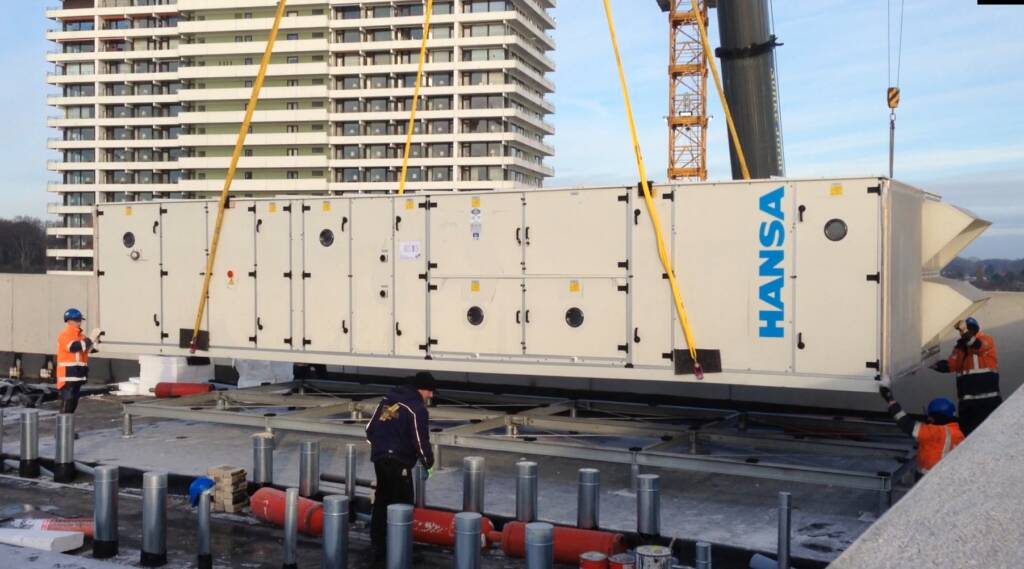
Protecting metal housings and structural components plays a major role for HANSA Klimasysteme GmbH, a manufacturer of individual ventilation and air conditioning systems. To improve this protection, the company has now invested in pre-treatment.
HANSA supplies solutions for swimming pools, IT cooling, hygiene, industry, laboratories and schools, among others. A characteristic feature of the company is its high degree of individuality. Many units are planned and built on a project-specific basis, often in small series or as individual solutions.
In production, the company works with a variety of materials and components, including Sendzimir galvanised sheet metal, standard galvanised steel, stainless steel, aluminium and polyester-coated materials.
It is precisely this diversity of materials that makes surface treatment a critical process step. The ventilation units are used in environments where humidity, condensation, temperature fluctuations or chemical loads can play a role.
Focus on simpler process control and shorter throughput times
For many years, HANSA worked with a process consisting of strongly alkaline cleaning with a degreasing booster, followed by two rinsing steps and a nano-ceramic passivation. In HANSA’s market positioning, corrosion protection—including systems up to C5H—has played an important role for some time.
At the same time, there was a growing desire in production for simpler and more efficient process control. The existing pre-treatment process required comparatively intensive process management. The company therefore wanted to examine whether the pre-treatment could be simplified without compromising quality. The focus was thus on a pre-treatment concept that is easier to control, requires less process heat and better suits a fast and reliable production flow. Together with AD Chemicals GmbH and the powder coating supplier CENARIS, an investigation was carried out into how the process chain could be further optimised.
Tested system structure with independent evaluation
Before the changeover, the new process was extensively tested. Initially, tests were carried out in HANSA’s own laboratory, at AD Chemicals and at the coating supplier. Subsequently, an independent paint institute, ILAK Institut für Lackprüfung Andreas Keiner GmbH, was engaged to independently evaluate the performance of the new system.
This step was important because it is not only the individual process steps but the complete system structure that ultimately determines performance. The new process consists of a neutral cleaner, two rinsing steps and the ‘PreCoat ADL 4P’ from AD Chemicals.
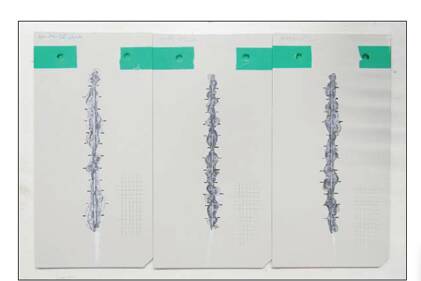
The system structure was evaluated on the basis of salt spray tests in accordance with DIN EN ISO 9227 NSS:2024-10, among others. Sendzimir galvanised sheets DX51D +Z275 with chemical pre-treatment from AD Chemicals, at least 80 µm CENARIS primer from the ‘Megaprimer’ series and at least 80 µm from the CENARIS topcoat series ‘Megapol’ were tested.
Lower process temperature and more efficient production
A key difference between the previous and the new process lies in the process temperature. While the earlier process worked at around 55 °C, the new process can be used at about 30 °C.
For HANSA, this is not only relevant from an energy perspective. The lower process temperature also contributes to more efficient process management and better controllable day-to-day production. The user also sees advantages in terms of process technology. The new pre-treatment is perceived as simpler and more robust. The process is easier to control and offers more control over the surface quality.
Positive response in production
In addition to the technical improvement, HANSA identified practical benefits in day-to-day production. The new pre-treatment operates with fewer severe hazard labels than the previous strongly alkaline process. This contributes to more pleasant working conditions.
The cooperation with AD Chemicals GmbH played an important role in this process. Alfred Stegeman, Sales & Process Engineer at AD Chemicals, accompanied the project from analysis through to implementation. The starting point was the question of how the existing process chain could be simplified while maintaining the quality of the entire coating system.
This was followed by practical implementation. AD Chemicals provided support with, among other things, the preparation of the baths, the search for a suitable company to clean the baths, and the training of plant operators in handling the new chemicals.
C5H remains an important factor
For HANSA, the highest level of corrosion protection remains an important issue. Currently, around 15 % of products have a C5H-related quality requirement. By 2035, the company expects this share to rise to about 25 %. This development is driven, among other things, by projects in the energy transition, such as converter stations for wind and solar energy, but also by applications in other segments.
More Information: www.adchemicals.com, www.cenaris.com, www.hansa-klima.de