
News Market
Coating in Belgium: between tradition and transformation
The Belgian surface treatment industry is small in geographical terms, yet remarkably diverse. We spoke with Veerle Fincken, General Manager at the Belgian Association for Surface Treatment – VOM, and Julie Moreau, Marcom & Operations Manager at VOM about market structures, technological trends, regulatory pressure and the growing challenge of finding skilled workers.
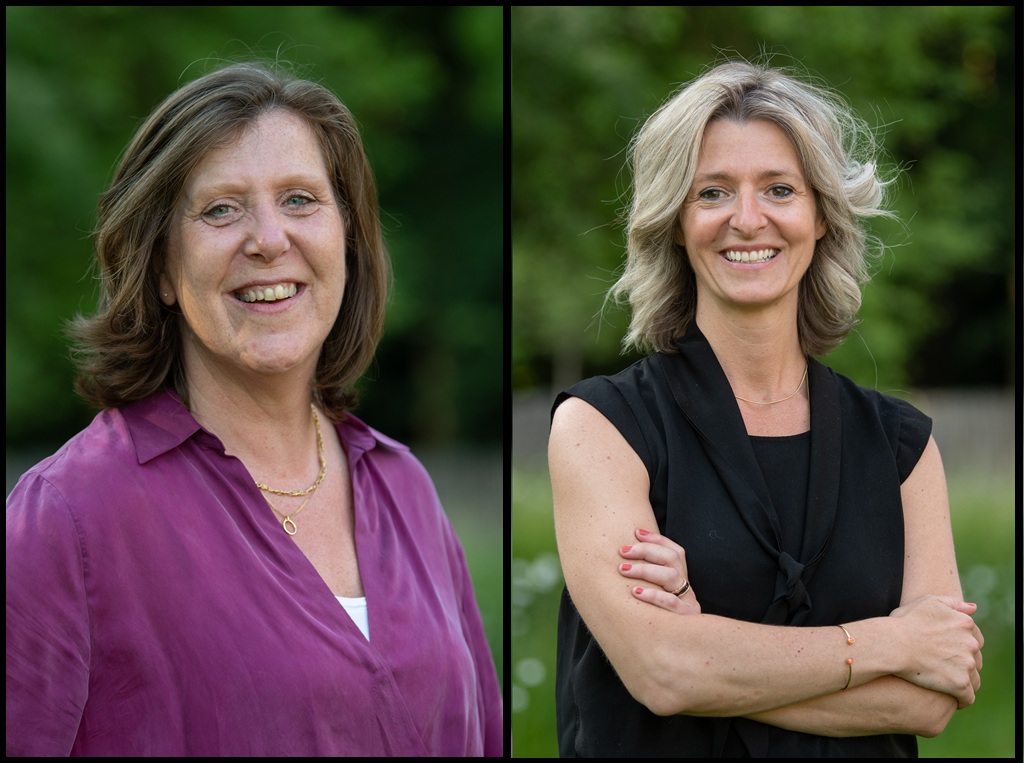
Mrs Fincken, could you briefly describe the Belgian market for industrial surface treatment?
Veerle Fincken: If we focus on organic coatings, the technology used most widely is powder coating. Powder coatings tends to serve the industrial market for architecture and machinery, whereas wet paint is more common in heavy industry — lorries, buses, agricultural equipment — as well as in aeronautics. Overall, powder coating represents the largest share of our industry and covers a broad range of end markets.
Are there regional differences within the country?
Fincken: Yes. Most coating activities are located in Flanders. In Wallonia and the Brussels area you will find more knowledge centres, but the larger paint applicators are concentrated in the Flemish part. There are of course job coaters in Wallonia as well, but the density is lower.
The picture is somewhat different in Wallonia. Although the number of surface treatment companies is smaller than in Flanders, the region has developed strong expertise in high-tech sectors such as aerospace, defence and life sciences. This expertise is supported by a well-established innovation ecosystem, including research centres, competitiveness clusters and public programmes that foster technological development. As a result, many Walloon companies have developed specialised know-how in advanced surface treatment technologies and regularly contribute to international projects.
Which technological trends are currently shaping the Belgian market?
Fincken: Energy savings are the most important topic. Companies are looking for low-temperature pretreatments, lower stoving temperatures and hybrid furnace applications. Automation is also on the agenda, but many Belgian companies work with small batches of 100 or 200 pieces, or even fewer. That makes it difficult to justify robotics and integrated production lines.
Another clear movement is towards the so-called class 2 super durable powder coatings. Thanks to their higher UV resistance, they can extend the service life of a coated product by 10 to 15 years, reaching up to 25 years overall. This is particularly relevant for architecture and construction applications. On the wet paint side, we see growing interest in high-solid systems, mainly driven by VOC regulation. Waterborne paints are still viewed with some skepticism regarding performance.
Is the automotive sector relevant in Belgium?
Fincken: We only have one car manufacturer left and it is in Chinese hands. All the others have either left the country or closed down their factories. Even in the truck and bus segment, activity is decreasing. So automotive is no longer the dominant industrial coating segment in Belgium.
How is regulation handled in Belgium?
Fincken: EU regulation is the leading framework for sustainable industry, and it is then translated into local legislation. Environmental regulation, however, is split between the three regions: Flanders, Wallonia and Brussels each have their own rules, and even the German-speaking part of Belgium has its specificities. In general, Belgian legislation tends to be somewhat stricter than the EU directives. Wastewater rules, for example, differ between Flanders, Wallonia and Brussels, so a company has to comply with the regulation of the region where its plant is located.
Starting a completely new factory has become quite difficult. The financial and administrative hurdles are considerable, and I believe many companies are discouraged from launching new projects. On top of that, there is now the growing challenge of grid access: distribution networks are overloaded — what we call “net congestion”. In the Netherlands it is already a major issue, and it is starting to appear in Belgium as well. You may be able to build a factory, but if you cannot get access to permanent power supply, you have a real problem.
Does that mean companies rather retrofit existing installations?
Fincken: Yes, there is a strong interest in modernising existing lines. For the powder booth or the furnaces, retrofitting is manageable, but it becomes difficult on the pretreatment side, where tanks are lined up one behind the other. The question is always whether you have enough space to integrate a new technology, especially while production continues to run.
Belgium is a relatively small country. How connected is the market internationally?
Fincken: On average, Belgium is known as an export country. It depends on the company profile. A small job coater typically works within a radius of about 100 kilometres. Larger companies operating internationally export a great deal. What we clearly observe is that many big industrial companies which had previously outsourced their coating activities are now building their own paint shops again. It gives them more flexibility, simplifies transport and logistics — which represent a significant part of the costs — and allows them to better control delivery times and production flow. So we see substantial investment in in-house paint shops rather than pure subcontracting.
That brings us to the question of qualified personnel.
Fincken: Exactly. When companies bring coating back in-house, they face a shortage of trained workers. You cannot simply move someone from the welding department to powder coating — it is a completely different profession. There is a real lack of good operators and employees in our field.
Is your association VOM helping in this regard?
Fincken: Yes. We run a yearly training programme covering powder coating, wet paint, pretreatment, corrosion, grinding and, since this year, also anodising — a topic that is gaining importance in Belgium. These trainings are almost always fully booked, which shows how strong the demand is.
The challenge is that in Belgium there is no institution — neither at secondary school, high school nor university level — where you can specifically learn about surface treatment. People learn chemistry or materials science, but not our surface treatment or industrial coating. As a result, knowledge is often passed on informally from colleague to colleague, based on 20 or 30 years of personal experience — but not necessarily on best practice. That is precisely where we come in.
Most of our training takes place in a classroom setting, because it is very difficult to find a company willing to open its production line for practical courses. In addition to our open programmes, we also organise tailor-made in-house trainings for specific companies. Our target group is people who already have a job and want to grow in their profession and reaching higher quality— not unemployed persons, for whom other institutions are responsible.
Julie Moreau: VOM organises a recurring programme of open training courses in Dutch throughout the year, bringing together participants from different companies. As an accredited training provider under the Flemish KMO-portefeuille scheme, eligible companies can benefit from financial support when enrolling their employees, making professional training more accessible.
In addition, we receive many requests for tailor-made in-company training programmes. These courses are developed together with experts from our member companies and adapted to the specific processes, technologies and needs of each organisation.
In Wallonia, we also organise several open courses, including chemical pretreatment, anodising and powder coating for operators. However, companies there more frequently request customised in-company training, allowing us to respond directly to their operational challenges.
What do you see as VOM’s role in supporting the future of the Belgian surface treatment industry?
Moreau: Beyond organising training programmes, VOM acts as a platform where companies, suppliers, research centres and experts come together to exchange knowledge and develop practical solutions. Whether the challenge is sustainability, innovation, digitalisation or skills development, collaboration has become essential. By connecting the different players across the value chain, we help our members anticipate change, strengthen their competitiveness and prepare for the future.
About VOM
VOM, the Belgian Association for Surface Treatment, currently represents around 260 member companies across the entire surface treatment value chain. The entire coating process is covered by the association, from surface pretreatment through to quality control. Aside of training programs VOM is active in the field of quality labels for industrial coating companies and offers a broad knowledge database for Belgian Coating experts.
Further information: www.vom.be