News Best Practice
Hydrema cuts VOCs with new single-coat system
The Danish manufacturer of construction and earthmoving machinery has replaced its two-coat process with a single-coat solution at both production sites, reducing volatile organic compound emissions while increasing throughput.
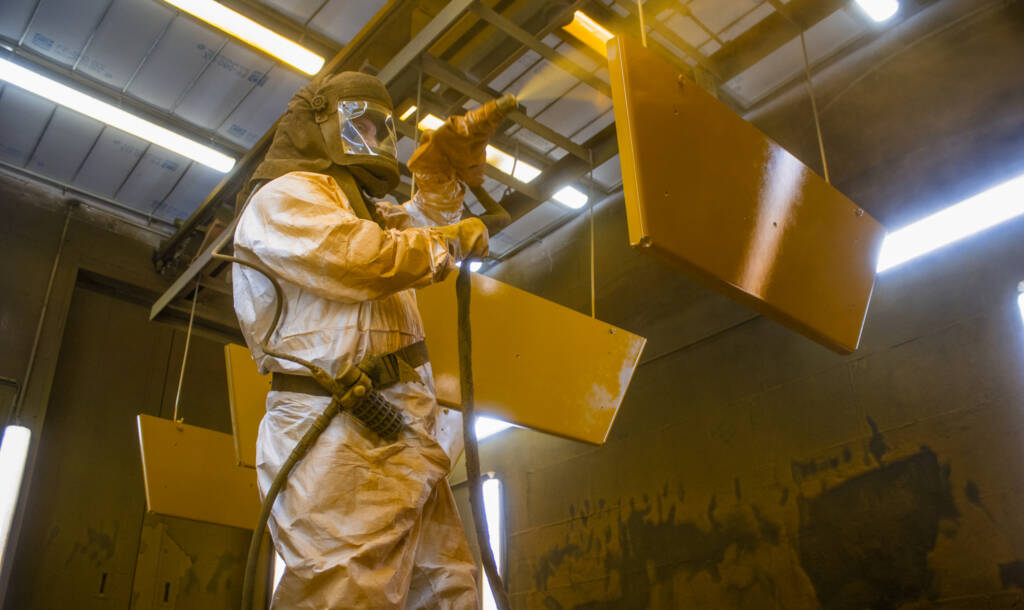
Hydrema, a family-owned manufacturer of dump trucks, backhoe loaders, and wheeled excavators, has completed the changeover to a single-coat coating process at its production facilities in Weimar, Germany, and Støvring, Denmark. The company, which ships its machines to customers across Europe, Australia, New Zealand, and the United States, has been working with coatings manufacturer Mankiewicz to implement the new system, based on “ALEXIT” High Build Monolyer.
Within the Hydrema Group, Marianne Frank Mogensen, Purchasing Manager, has been responsible for coating strategies and specifications for more than 30 years. According to her, the coating process plays a central role in the manufacturing operation at both sites. “The right coating has a major impact on how well our vehicles withstand daily use, how they are perceived in the market, and how much value they retain over the long term,” she explains. “At the same time, the coating process must be reliably integrated into production because it has a substantial effect on lead times and the pace of production.”
Growth created pressure at German site
Driven by steadily increasing demand, Hydrema has expanded its production capacity in recent years. At the Weimar site in Germany in particular, manufacturing output rose significantly while the regulatory limits on VOC emissions remained unchanged. The paint shop therefore had to find a way to achieve higher unit volumes within the existing emissions-permitting framework, while also safeguarding surface quality and process stability as production continued to grow.
“The single-coat approach was the logical step,” says Mogensen. Hydrema was already familiar with Mankiewicz from other applications and had existing product and application experience. The focus was now on developing a solution that could be reliably transferred into production and would consistently meet the company’s requirements for surface quality, process stability, and lead times.
Measurable improvements in production
The switch first took place in Weimar, where the pressure to act was highest. By moving from the two-coat system to the new solution, the VOC footprint fell by 30 to 40 percent. At the same time, corrosion protection improved, and the production flow changed noticeably: because components now pass through only one process step, Hydrema in Weimar achieves higher throughput on the same footprint, without any additional spray booths.
“We have become significantly faster and more efficient as a result of the changeover,” says Mogensen. “The key factor is that the drying times fit our conveyor system exactly. The parts have to be sufficiently hardened and ready for handling within a fixed time window.” Just 2.5 hours after coating, the components are ready for assembly.
Flexible paint system
The new system also provides flexibility in colour matching. In addition to Hydrema’s standard colours of yellow, black, and grey, customer-specific colours can also be implemented. The coatings supplier develops the colour in its in-house colorimetry laboratory and produces the coating in the requested configuration. “For the painters, this is a decisive advantage: the mixing ratio, viscosity, nozzles, pressure, and temperature all remain the same. They do not have to adjust to a new system; they always work with familiar parameters,” explains Mogensen.
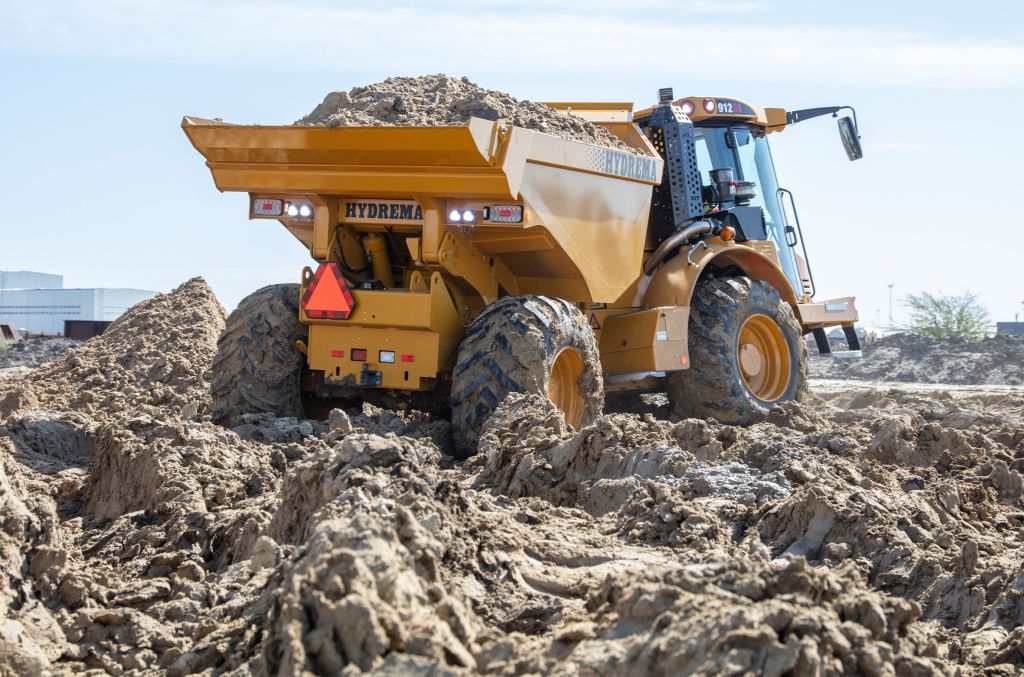
Even though parts are produced at different sites, the coulours always match perfectly. (Picture: Hydrema)
Colour consistency during parallel operation
A particular challenge during the transition phase was maintaining colour consistency between the two sites. While Germany was already using the new solution, Støvring in Denmark initially continued with the previous coating system. With around 50,000 part numbers across the group, even a small deviation in surface appearance would have caused considerable problems.
“For us, it was clear: even if the two plants were temporarily working with different systems, every component had to fit together in the end. The machine has to look as if it were made from a single piece,” Mogensen describes the challenge.
For the specified Hydrema yellow, colour matching was carried out on the basis of a sample panel provided by Hydrema. Tighter Delta E tolerances played an important role: compared with the previous tolerance window of 1.0, the colour could be set more precisely and reproduced with greater stability. The colour was tested under different lighting conditions at the supplier’s testing centre and documented in detailed test reports.
Improved corrosion protection
Beyond the process and environmental aspects, the changeover was also relevant for the long-term quality of the machines. Compared with the previous coating, Hydrema achieved a higher corrosion protection category of C3 VH according to ISO 12944. This is an important factor because the machines are continually exposed to stone chips, dirt, lubricants, and other stresses on jobsites. The protectio is, however, not achieved alone by the coating. “For us, corrosion protection begins with the pre-treatment stage. If this process is not kept under control, it is not possible to reliably guarantee the quality of the subsequent coating. That is why we regularly monitor the plant, the process parameters and the chemicals used, because only a consistent pre-treatment process lays the foundation for a surface of consistently high quality”, explains Marianne Frank Mogensen.
According to Mogensen, the improved environmental footprint did not come at the expense of surface quality. Because the coatings supplier carries out extensive testing and documentation in advance, Hydrema no longer needs to conduct its own field tests after one or more years of service to verify surface appearance, colour stability, or UV resistance. This level of process stability is also to be applied to supplier-produced parts in the future.
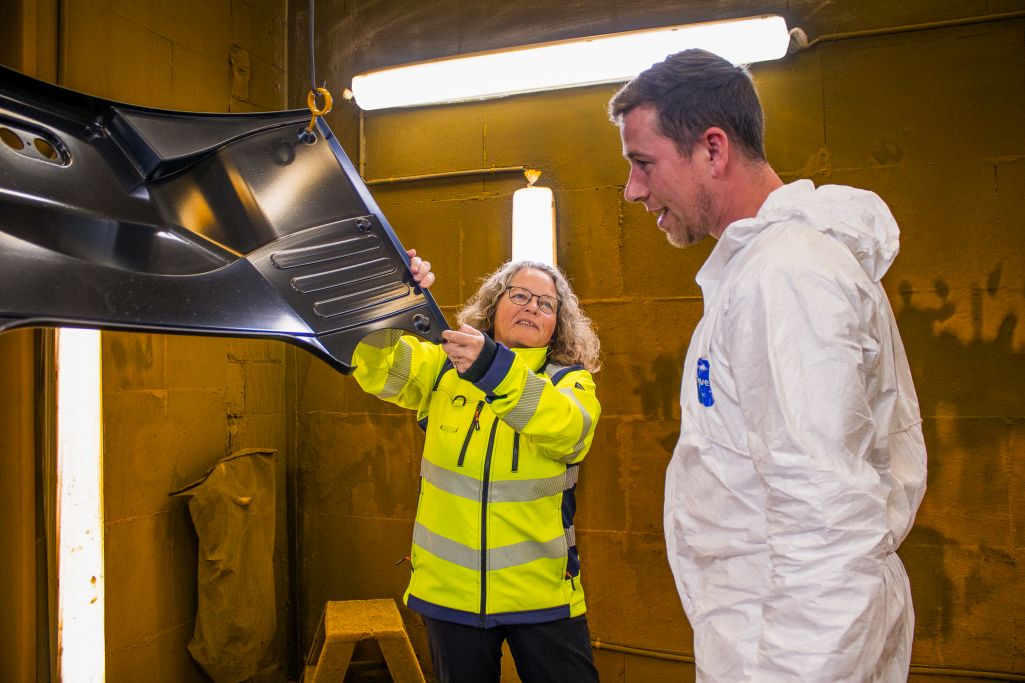
“The right coating has a major impact on how well our vehicles withstand daily use", explains Marianne Frank Mogensen from Hydrema. (Picture: Hydrema)
Rollout completed in Denmark
As of early this year, the Støvring site has also fully switched to the single-coat process. Mogensen describes this step as comparatively straightforward, as Hydrema was able to draw on the experience gained in Weimar. Although Denmark does not have comparable VOC requirements, the company saw a clear responsibility to further reduce emissions at this site as well and to meet its own ESG requirements.
“Basically, the project can be summed up in few words: successful in every respect. We gained capacity, secured quality, and, above all, proved our commitment to the people who work with the product every day,” Mogensen concludes. “Even experienced painters who have been with the company for decades support the changeover.”
More information:
Recommendation: You want to stay up date on everything in the gloabl industrial coating industry? Then sign up for our free of charge Newsletter!